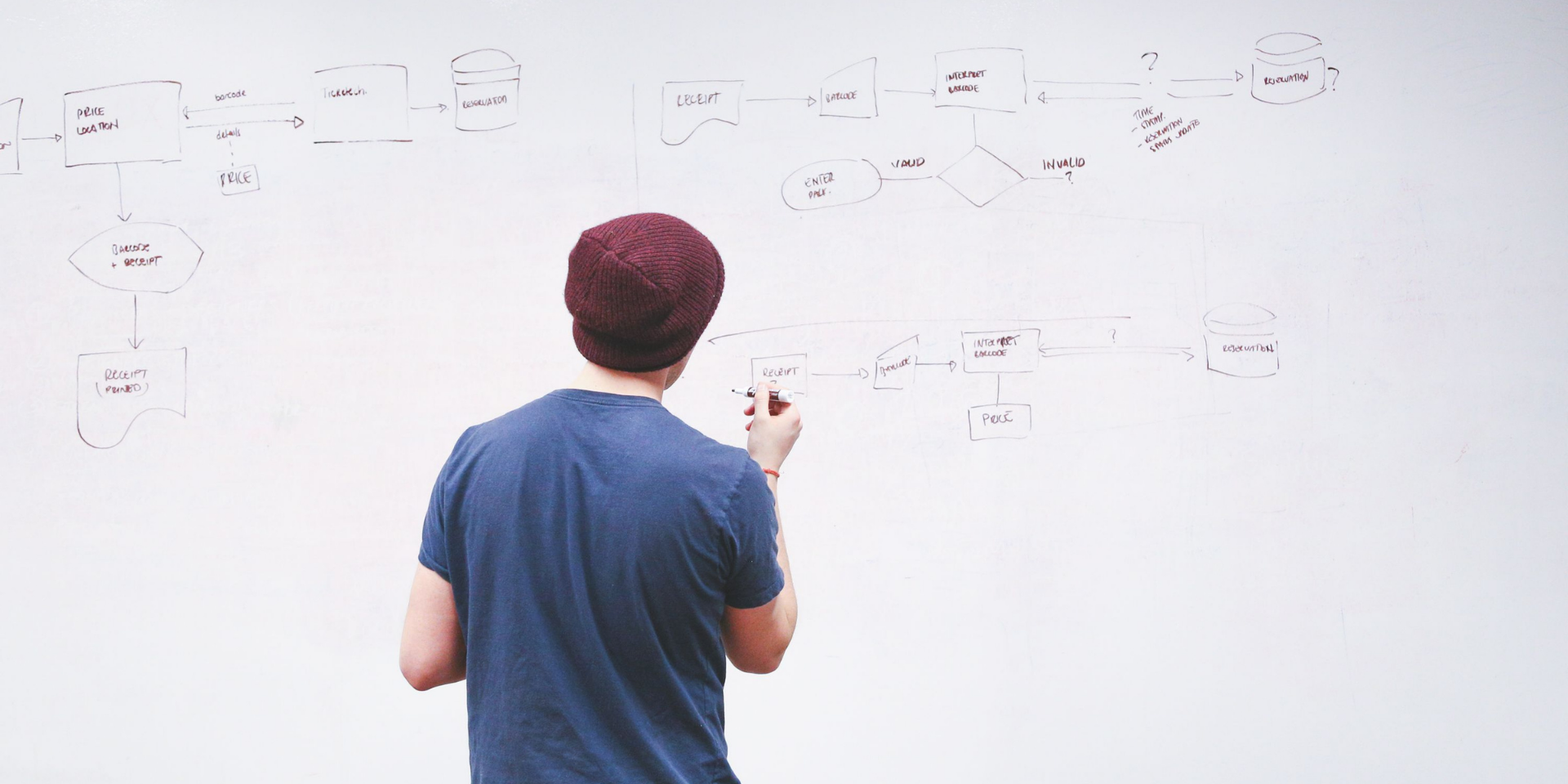
Staalduinen: An eCommerce Platform Built for a Business Where Every Product Has a Shelf Life
How we turned a phone-and-fax sales operation into a self-serve online ordering platform that freed customer service to focus on sales.
About the Company
Staalduinen is a family-owned flower wholesaler and distributor that has been passed down through generations. The company imports flowers from around the world and sells them wholesale to florists, event planners and grocery stores with in-house floral departments throughout Ontario.
Selling flowers comes with some interesting challenges. You’re dealing with a living product with a very short shelf life, so inventory needs to move quickly. At the same time, flowers behave much like a commodity: prices can change frequently based on current market rates, right down to the individual flower.

That combination makes managing inventory, pricing and customer orders far more complex than a typical ecommerce business.
The Problem
Staalduinen came to us with what sounded like a straightforward request: they needed an ecommerce website. Their competitors were already selling online, and they knew they needed to give their customers the same convenience. At the time, customers placed their orders directly through customer service by phone.
But once we got under the hood, it became clear this wasn’t simply an ecommerce project. We had to account for:
- A proprietary ERP built over many years. The system had evolved alongside the business, with functionality added on an ad hoc basis as different needs came up. Because there was no documentation to refer to, we had to take the time to understand how the existing system worked before we could determine how the ecommerce platform should integrate with it.
- Two very different ways of buying flowers. Customers could pre-order from a seasonal list or buy directly from inventory currently available in the warehouse.
- Prices and inventory that could change by the minute. The ecommerce site couldn’t operate independently from the ERP. The two systems needed to work together and stay in sync.
- Customer service spending significant time on routine tasks.
Staff were taking straightforward orders over the phone, resending invoices and handling requests customers could manage themselves online.
So, the real challenge wasn’t just to build an online store. It was to understand how Staalduinen’s business actually worked and translate that into an ecommerce experience that worked for their customers, their staff and their existing ERP.
And we needed to get the foundation right. It had to be something they could build on and scale, rather than something they’d have to replace a few years down the road.
Engagement Details
We started by learning the flower business. Understanding how Staalduinen buys, sells and delivers flowers took time, but that discovery work mattered. We wanted to build around how the business actually operated, rather than make the business fit the technology.
The engagement brought custom web design, ecommerce development and ERP integration together as one project. That allowed us to think about the entire customer experience and the systems behind it, rather than treating each piece separately.
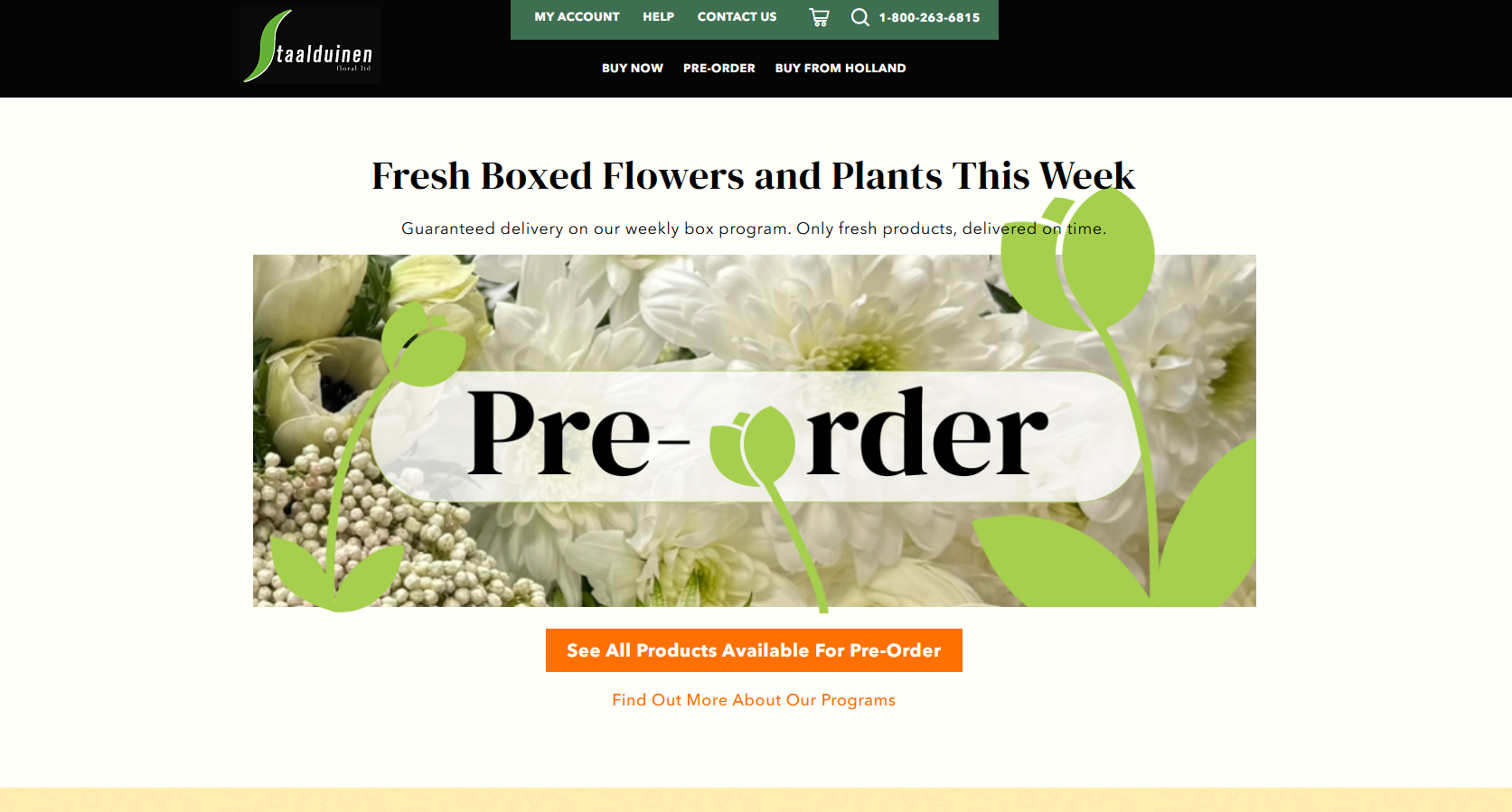
Choosing the Right Framework: Kentico
We recommended Kentico CMS because we knew this website needed to do more than manage content. It had to handle a fairly complex integration with Staalduinen’s ERP.
- Product information would come from the ERP, with data changing frequently.
- Website content, including shipping information, company pages and category descriptions, could be managed through the CMS.
- Kentico gave us the flexibility to bring the two together within one ecommerce platform.
- We also provide the hosting and ongoing website maintenance, so we continue to support the platform as the business evolves.
Integrating the ERP Without Sacrificing Performance
Pulling all of the data from the ERP in real time wasn’t practical. On product listing pages, where dozens of products and data points may need to load at once, constant calls to the ERP would have slowed the site considerably.
Instead, we looked at each data point and determined how current it actually needed to be:
- Time-sensitive information is synchronized frequently.
- Less volatile information can synchronize at scheduled intervals or at the end of the day.
- Each synchronization schedule
is based on the needs of the business rather than applying the same rule to everything.
This gives customers current information where it matters without making them wait unnecessarily for pages to load.
Multiple Shopping Carts Based on Delivery Dates
One of the more interesting challenges was the shopping cart. A traditional ecommerce cart simply wasn’t going to work because Staalduinen’s customers buy flowers in two different ways:
- Pre-order: Customers choose from a list of seasonal or available flowers that Staalduinen then orders from its suppliers. Because flowers are live products, delivery dates matter. Flowers required for the 10th and flowers required for the 30th can’t be treated as one order. Each delivery date therefore has its own cart.
- Buy now:
Customers purchase from inventory already in Staalduinen’s warehouse and select their delivery date. Because this inventory is live and time-sensitive, when a product is placed in a cart, it’s temporarily taken out of available inventory so another customer can’t purchase it. A timer ensures products don’t sit indefinitely in an abandoned cart. If the customer doesn’t complete their order within the allotted time, the products are released back into inventory and made available to other customers.
A customer can have multiple carts open at the same time, while still being able to clearly see and manage what they’re ordering for each delivery date.
Giving Customers More Control
The ecommerce platform also gives registered customers access to information and routine tasks that previously required help from customer service.
Customers can now:
- Browse available products and place their own orders.
- Manage orders based on expected delivery dates.
- Track their shipments.
- View their account information.
- Download invoices and purchase orders as PDFs whenever they need them.
The goal wasn’t to remove customer service from the experience. It was to give customers the convenience of handling straightforward tasks themselves, while giving Staalduinen’s team more time to focus on the conversations where they can provide real value.
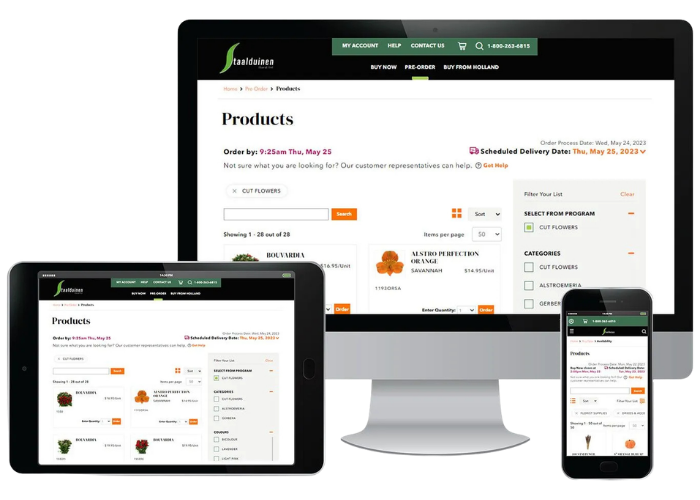
The Result
The biggest change wasn’t simply moving orders online. It changed how customers buy from Staalduinen and how their customer service team spends its time.
| Before | After |
|---|---|
| All orders were placed by phone through customer service. | Customers can order online on their own schedule, whether they’re pre-ordering flowers or buying from available inventory. |
| Staff regularly handled routine requests to resend invoices and purchase orders. | The ecommerce platform is deeply integrated with Staalduinen’s proprietary ERP, keeping the website connected to the systems already running the business. |
| Customers had limited visibility into available inventory and order status without contacting Staalduinen. | Customers have more control over their accounts, including tracking shipments and downloading invoices and purchase orders when they need them. |
| Competitors were already giving their customers the option to order online. | Customer service can spend more time selling. Staff can see orders coming in through the website and follow up with complementary product suggestions, creating opportunities to increase both order size and the number of products sold. |
| Customer service spent a significant amount of time taking orders rather than focusing on sales. | The platform can continue to evolve. Because we invested the time upfront to understand the business and build the right foundation, new functionality can be added without starting over. |
Several years of real customer use have also given us valuable insight into what should come next. We’re now refreshing the UX and graphic design and working on features that make it easier for customers to navigate thousands of products, including:
- Favourites, so customers can quickly narrow the catalogue to the flowers and products they regularly purchase.
- Flyer-based filtering, so customers receiving a digital flyer can go directly to the website and see the products featured in that flyer.
That’s an important part of this story for us. Technology shouldn’t dictate how a business operates. You need to understand the business first and then build technology around it.
When you’re dealing with products that expire, prices that can change by the minute and an ERP that has evolved organically over many years, that upfront work matters. It’s what allows the platform to keep evolving with the business instead of having to be rebuilt every time the business evolves.
Addressing the challenges of B2B field service companies
With our 25 years of experience in web development and digital marketing we have developed a unique system to address the challenges of B2B service companies. Our approach generates predictable results and we offer a unique performance guarantee.
Below is a decription of our 4-step process. This case study is relevant for phases 1 and 2 of our programme:
Find Hidden Profits In Your Business Systems
Generate 5x ROI
On Digital Marketing
Open New Markets Profitably
We create a digital marketing strategy to differentiate you from the competition and attract profitable clients

Digital Transformation with custom automations removes costly inefficiencies and
saves overhead cost

Your Digital Marketing System delivers warm leads to sales, growing your revenue with our 5x ROI guarantee

With technicians and leads in new markets you can grow and
expand to new locations
without additional overhead
Do you have any questions on the above, or would you like to share your experience? Just email [email protected] or call 289-536-6797.
At Mawazo Marketing we work with owners of B2B companies who want to accelerate their business. We help them with a concrete digital growth plan, a website that saves operational cost, and a digital marketing system that generates leads. For qualifying clients we offer a 5x ROI guarantee: if we don't reach the objective, then we pay back the difference. Book a Free Strategy Session to find out more.